If you have ever watched a traditional Argentine asado, you already understand the magic of a Santa Maria grill. The sight of meats slowly roasting over an open wood fire, the grill grate rising and lowering with a smooth turn of the wheel — it is not just cooking. It is theater.
But buying the right Santa Maria grill is not as simple as picking the first one you see online. Whether you are outfitting a restaurant kitchen, upgrading a backyard BBQ setup, or sourcing for a retail brand, the differences in material, build quality, and features can make or break your investment.
This guide breaks down everything you need to know before purchasing a Santa Maria-style charcoal grill in 2026.
What Is a Santa Maria Grill?
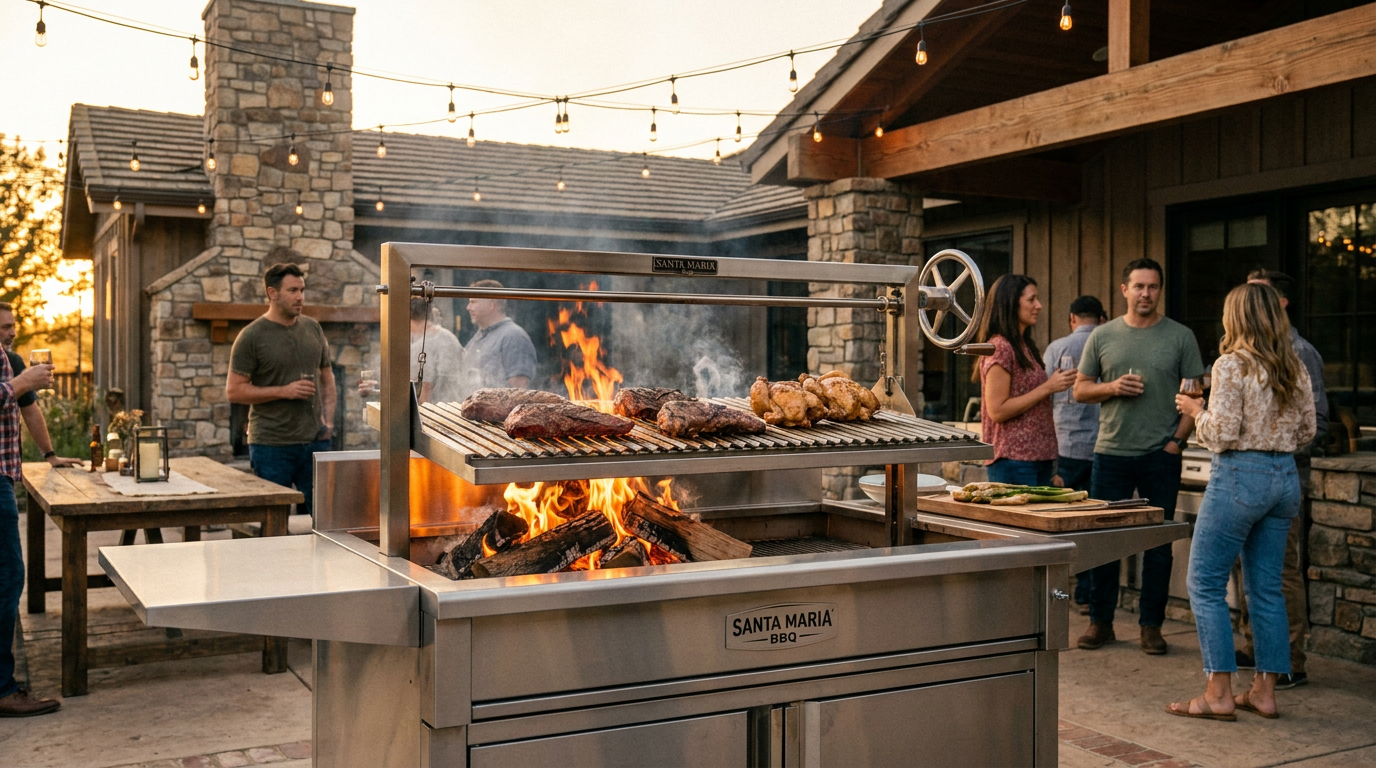
A Santa Maria grill is a charcoal or wood-fired grill featuring an adjustable-height cooking grate. The grate is connected to a wheel-and-cable mechanism that allows you to raise or lower it over the fire, giving you precise control over cooking temperature.
Originating from the Santa Maria Valley in California — inspired by Argentine grilling traditions — this style has become a staple in steakhouses, BBQ competitions, and high-end outdoor kitchens worldwide.
Unlike a standard kettle or gas grill, the Santa Maria grill relies on convection and radiant heat, not direct flame contact. This makes it ideal for large cuts of meat, whole chickens, and slow-roasted tri-tip.
Key Features to Look For
1. Grate Adjustment Mechanism
This is the heart of any Santa Maria grill. Look for:
- Smooth wheel operation — The wheel should turn effortlessly, even with a fully loaded grate. Avoid jerky or stiff mechanisms.
- Stainless steel cable and pulley system — Inferior cables rust quickly or snap under heat stress. 304 stainless steel is the industry benchmark.
- Locking capability — The grate must lock securely at any height without drifting.
2. Material and Build Quality
The difference between a grill that lasts 2 years and one that lasts 15 years comes down to materials:
| Component | What to Look For | What to Avoid |
|---|---|---|
| Grill body | 304 stainless steel or heavy-gauge (2mm+) carbon steel with high-temp coating | Thin-gauge steel (under 1.5mm), uncoated mild steel |
| Cooking grate | 304 stainless steel rods, minimum 5mm diameter | Chrome-plated grates (peels over time), thin wire grates |
| Firebox | Double-walled construction, stainless steel or thick carbon steel | Single-layer sheet metal that warps under heat |
| Wheel & handle | Stainless steel or cast iron with weatherproof finish | Plastic components, painted steel that chips |
Pro tip: If you plan to use the grill in a coastal area or humid climate, insist on full 304 stainless steel construction. Salt air destroys coated steel within months.
3. Size and Cooking Area
Santa Maria grills come in a wide range of sizes. Choose based on your intended use:
- Compact (24-30 inches wide): Ideal for home backyards, small patios. Feeds 6-12 people.
- Mid-size (36-48 inches): Suitable for large family gatherings, weekend BBQ catering. Feeds 15-30.
- Commercial (60-96+ inches): Built for restaurants, event venues, and high-volume catering. Feeds 50+ guests per session.
When calculating size, remember: with a Santa Maria grill, you are cooking with indirect radiant heat, not direct flame. You need roughly 30-40% more grate space compared to a direct-heat charcoal grill for the same amount of food.
4. Firebox Design
A well-designed firebox makes all the difference in heat management:
- Depth matters — A firebox at least 8-10 inches deep allows you to build a proper coal bed without ash choking the airflow.
- Vented ash management — Look for an ash pan or drawer system. Removing ash mid-cook should not require taking apart the grill.
- Multi-zone capability — Some models include firebox dividers, allowing you to build hot and cool zones on the same grate.
5. Portability and Installation
- Freestanding vs. built-in: Freestanding models come with legs or a cart and can be moved. Built-in models are designed for outdoor kitchen islands and require professional installation.
- Wheels or casters: If you plan to move the grill around your patio or kitchen, look for heavy-duty locking casters rated for the grill’s total weight.
- Weight: A full-size commercial Santa Maria grill can weigh 300-600 lbs. Make sure your surface can support it.
Santa Maria vs. Other Grill Types
| Feature | Santa Maria Grill | Standard Charcoal Grill | Gas Grill | Pellet Smoker |
|---|---|---|---|---|
| Heat control | Manual grate height adjustment | Fixed grate, vent control | Knob-controlled burners | Digital thermostat |
| Fuel | Wood, charcoal, or both | Charcoal | Propane/natural gas | Wood pellets |
| Flavor profile | Authentic wood-fire, adjustable intensity | Classic charcoal | Mild, clean | Smoky, consistent |
| Cooking style | Slow roast + sear | Direct grill | Direct grill | Low-and-slow |
| Best for | Tri-tip, whole cuts, steakhouse experience | Burgers, steaks, quick cooks | Weeknight convenience | Brisket, ribs, long smokes |
| Learning curve | Moderate | Low | Very low | Low |
If you value flavor versatility and the theatrical cooking experience, nothing beats a Santa Maria grill. If you prioritize speed and set-it-and-forget-it convenience, consider a gas grill or pellet smoker instead.
Commercial vs. Residential: What Changes?
If you are buying for a restaurant or catering business, here are the additional factors that matter:
Commercial-Grade Requirements
- NSF certification — Required in many jurisdictions for food service equipment. Verify before purchasing.
- Heavier construction — Commercial grills see 5-10x more use than residential units. Look for 3mm+ firebox steel and reinforced grate supports.
- Serviceable parts — Bearings, cables, and pulleys should be easily replaceable without specialized tools.
- Grease management — A proper grease channel and collection system is essential in commercial settings to meet fire code.
- Volume capacity — Calculate your peak-hour throughput. A busy steakhouse may need a 96-inch model with dual fireboxes.
Residential Considerations
For home use, focus on:
– Weather resistance (stainless steel pays for itself here)
– Cover compatibility (buy a fitted cover on day one)
– Ease of ash cleanup
– Aesthetics (this grill will be a focal point of your outdoor space)
Price Ranges: What to Expect in 2026
| Tier | Price Range (USD) | What You Get |
|---|---|---|
| Entry-level residential | $800 – $1,500 | Carbon steel body, basic wheel mechanism, 30-36 inch width |
| Mid-range residential | $1,500 – $3,000 | Stainless steel components, smoother mechanism, larger sizes |
| Premium residential | $3,000 – $6,000 | Full 304 stainless, commercial-grade build, custom options |
| Commercial entry | $4,000 – $8,000 | Reinforced construction, NSF-ready, 60+ inch width |
| High-end commercial | $8,000 – $15,000+ | Dual fireboxes, full custom fabrication, designed for 24/7 use |
Direct-from-manufacturer pricing can save 30-50% compared to retail brands. If you are sourcing in volume, always ask for factory-direct quotes — especially from manufacturers with their own CNC and stainless steel fabrication facilities.
Questions to Ask Before Buying
Before you place your order, confirm these with the seller or manufacturer:
- What grade of stainless steel is used for food-contact surfaces? (Answer should be 304 or 316.)
- What is the thickness of the firebox steel? (Minimum 2mm for residential, 3mm for commercial.)
- Are replacement parts available? (Cables, pulleys, and grate rods wear over time.)
- What certifications does the grill hold? (CE, RoHS, FDA for food safety, NSF for commercial kitchens.)
- Can the grill be customized? (Logo engraving, custom dimensions, color options.)
- What is the warranty on the firebox, grate, and mechanism?
Final Verdict
A Santa Maria grill is not the cheapest option, and it is not the easiest to master. But for those who care about authentic wood-fire flavor, precision heat control, and the ritual of open-fire cooking, there is simply no substitute.
If you are sourcing for a commercial operation, prioritize build quality and serviceability. If you are buying for your home, invest in stainless steel and buy once — this is a grill that should outlast you.
Looking for a reliable Santa Maria grill manufacturer? Contact Toshine for factory-direct pricing, OEM customization, and global shipping options. All our grills are built with 304 stainless steel in our own CNC-equipped facility.