A portable charcoal grill is one of those purchases that seems simple — until you start comparing options. Suddenly you are weighing stainless steel vs. coated steel, folding vs. suitcase designs, and wondering whether that ultralight 8-pound grill can actually cook a decent steak.
As someone who has tested portable grills from tailgate parties to backcountry campsites, I can tell you: the right grill transforms an outdoor meal from a compromise into a highlight. The wrong one leaves you with cold food and a trunk full of frustration.
This guide sorts through the noise so you buy the right portable charcoal grill for how you actually use it.
What Makes a Grill “Portable”?
The portable grill category spans a wide range. Before you shop, define what “portable” means to you:
| Portability Level | Weight | Transport | Best For |
|---|---|---|---|
| Ultra-portable | Under 10 lbs | Backpack, motorcycle | Solo camping, hiking side trips |
| Compact portable | 10-25 lbs | Car trunk, RV storage | Car camping, beach days, picnics |
| Full-featured portable | 25-50 lbs | SUV, truck bed | Tailgating, large group camping, van life |
Be honest with yourself: if you are hiking three miles to a campsite, every pound counts. If you are pulling up to a tailgate in an SUV, a 35-pound grill on wheels is no problem.
Key Features to Evaluate
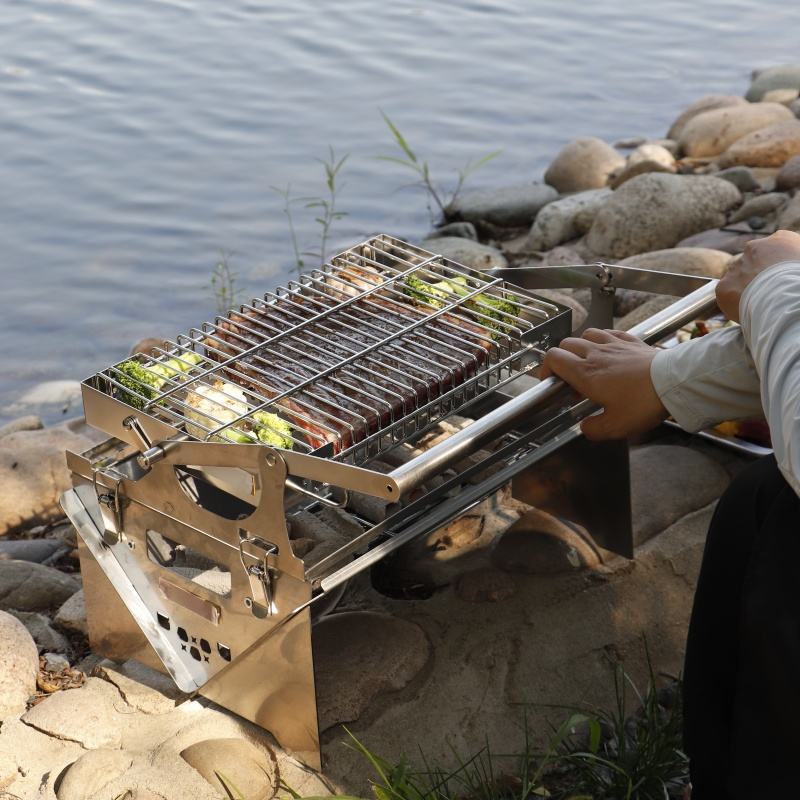
1. Folding Mechanism and Setup Time
This is the number one differentiator between portable grills. Some unfold in 10 seconds. Others require 10 minutes, a screwdriver, and a YouTube tutorial.
Common designs:
- Suitcase/folding leg design: Legs fold under the body. Opens like a briefcase. Setup in 30 seconds. Most popular for car camping.
- X-frame folding: Scissor-style legs that collapse flat. Extremely compact when folded. Good stability.
- Briefcase/split-body: The grill body itself splits into two halves. Doubles as a carrying case. Ingenious for charcoal transport.
- Tripod/standalone: Detachable legs. Lighter weight but more parts to manage.
Test this: If you cannot set it up one-handed in under 60 seconds while holding a beer, it is too complicated for a portable grill.
2. Material: The Stainless Steel Advantage
Portable grills live a rough life. They get tossed in trunks, rained on, and exposed to salt air at the beach.
| Material | Rust Resistance | Heat Performance | Weight | Lifespan |
|---|---|---|---|---|
| 304 Stainless steel | Excellent | Excellent | Moderate | 10+ years |
| 430 Stainless steel | Good | Good | Moderate | 7-10 years |
| Porcelain-coated steel | Good (until chipped) | Good | Moderate | 3-5 years |
| Painted/powder-coated steel | Poor | Adequate | Light | 1-3 years |
| Cast iron | Poor (requires seasoning) | Best heat retention | Heavy | 10+ years with care |
Bottom line: For a portable grill that will see outdoor abuse, stainless steel is worth every extra dollar. Coated steel grills look great on day one, but a single scratch through the coating starts a rust cascade that ruins the grill within a season or two.
3. Grate Quality
The cooking grate is the only part that touches your food. Do not compromise here:
- 304 stainless steel rod grates — Best. Easy to clean, rust-proof, good sear marks.
- Cast iron grates — Excellent heat retention and searing, but heavy and needs seasoning maintenance. Not ideal for portability.
- Chrome-plated wire grates — Avoid. Cheap, rust-prone, and the plating flakes into your food over time.
- Porcelain-coated grates — Decent if kept scratch-free, but a single metal spatula slip exposes bare steel.
4. Cooking Area: How Much Do You Really Need?
| Grill Width | Cooking Area (approx.) | Feeds |
|---|---|---|
| 12-14 inches | 150-200 sq. in. | 1-2 people |
| 16-18 inches | 200-280 sq. in. | 2-4 people |
| 20-24 inches | 300-450 sq. in. | 4-6 people |
| 26+ inches | 500+ sq. in. | 6-10 people |
A 200 square inch grate fits about 4-5 burger patties or 2 medium steaks. If you regularly cook for more than two people, aim for at least 250 square inches.
5. Airflow and Temperature Control
Charcoal needs oxygen. The best portable grills have:
- Adjustable air vents on both the bottom and lid — This lets you control temperature. Bottom vent open + top vent open = hot, fast fire. Bottom partially closed = lower, slower cooking.
- Vents that do not clog with ash — Some designs place the intake too close to the ash bed. After 30 minutes of cooking, airflow chokes.
- A lid that seals reasonably well — You are not buying a smoker, but a lid with a decent seal lets you close the vents and snuff the charcoal for reuse.
6. Ash Management
Portable doesn’t mean you should leave a mess behind. Look for:
- Removable ash tray or drawer — Cleanup in seconds without tipping the whole grill.
- Elevated charcoal grate — Keeps the charcoal above accumulating ash so airflow stays consistent.
- Enclosed ash capture — Some folding grills have a bottom body that catches ash during transport. Essential for “leave no trace” camping.
Foldable vs. Fixed-Leg Portable Grills
| Folding/Leg Design | Briefcase/Suitcase Design | |
|---|---|---|
| Setup time | 30-60 seconds | 10-20 seconds |
| Packed size | Very compact | Compact |
| Stability | Good on flat ground | Excellent, low center of gravity |
| Best use | Car camping, picnics | Tailgating, beach, park |
| Typical weight | 15-35 lbs | 8-20 lbs |
Price Ranges
| Tier | Price (USD) | What You Get |
|---|---|---|
| Budget | $30 – $80 | Painted steel, basic grates, minimal features. Expect 1-2 seasons. |
| Mid-range | $80 – $200 | Stainless steel or good coating, decent grates, better airflow design. |
| Premium portable | $200 – $500 | Full 304 stainless, excellent grates, thoughtful folding design, accessories included. |
| High-end compact | $500 – $1,000+ | Commercial-grade materials, multi-function (grill + smoker), designed for frequent use. |
Pro Tips From Someone Who Has Learned the Hard Way
-
Break in the grill before your trip. New grills have manufacturing residue. Run a full hot fire for 30 minutes, then season the grate with oil. Do this at home, not at the campsite.
-
Use a charcoal chimney. Lighter fluid tastes terrible and is unnecessary. A $15 chimney starter lights charcoal evenly in 15 minutes with nothing but newspaper.
-
Bring a small fire extinguisher or water source. Portable grills sit low to the ground. Dry grass underneath is a fire hazard.
-
Pack a grill mat. A heat-resistant mat protects picnic tables and prevents grease stains on your deck.
-
Check local fire restrictions. Many parks and campsites ban charcoal grills during dry seasons. Always verify before you go.
Final Verdict
The best portable charcoal grill is the one you will actually use. Do not buy a heavy 40-pound “portable” grill if you hate lugging gear. Do not buy an ultralight 8-pound grill if you cook for a family of six.
Match the grill to your reality. Prioritize stainless steel construction if you want it to last, and always test the folding mechanism before buying — if it feels flimsy in the store, it will feel worse at a windy campsite.
Looking for a durable stainless steel portable grill built for real outdoor use? Browse Toshine’s portable grill collection — factory-direct pricing with OEM customization available for brands and retailers.