There is a reason wood fired pizza commands a premium on every menu. The blistered crust, the whisper of smoke, the 90-second bake time at 900 degrees Fahrenheit — none of it is achievable with a standard kitchen oven.
Whether you are a homeowner dreaming of backyard pizza parties or a restaurateur adding an outdoor kitchen to your venue, a wood fired pizza oven is one of the most rewarding investments you can make. But the market is flooded with options, and not all pizza ovens are built equal.
This guide walks you through every decision point — materials, size, insulation, fuel type, and budget — so you buy the right oven the first time.
Why Go Wood Fired?
Before we dive into specs, let us address the core question: why wood fired instead of gas or electric?
The Temperature Factor
A wood fired pizza oven reaches 700°F to 950°F, compared to a standard home oven that maxes out at 500°F. That temperature gap is everything. At 900°F, a Neapolitan-style pizza cooks in 60 to 90 seconds, producing a leopard-spotted char on the crust while keeping the interior moist and tender.
The Flavor Factor
Wood smoke contains aromatic compounds — guaiacol, syringol, and others — that bond with the dough and toppings at high heat. This cannot be replicated by gas or electric ovens. The type of wood you use (oak, hickory, apple, cherry) adds another layer of flavor customization.
The Experience Factor
A wood fired oven is a centerpiece. It anchors a backyard or restaurant patio. Guests gather around it. The visible flame, the aroma, the anticipation — it turns cooking into an event.
Key Buying Factors
1. Material: What the Oven Is Made Of
The dome and floor of a pizza oven must withstand extreme thermal cycling — heating from ambient to 900°F and back down, over and over. Material choice determines heat retention, durability, and cooking performance.
| Material | Heat Retention | Durability | Weight | Best For |
|---|---|---|---|---|
| Refractory brick | Excellent | 20+ years | Very heavy (800-2000 lbs) | Permanent installations, restaurants |
| Cast refractory (precast) | Very good | 15+ years | Heavy (400-800 lbs) | Residential, semi-permanent |
| Stainless steel (304) | Good (with insulation) | 10+ years | Moderate | Portable, modern aesthetics |
| Cordierite/ceramic | Good | 10+ years | Lightweight (50-150 lbs) | Portable tabletop ovens |
Our recommendation: For a permanent backyard or commercial installation, precast refractory offers the best balance of performance and cost. For portability, a well-insulated stainless steel oven is the practical choice.
2. Insulation: The Invisible Differentiator
Here is what cheap oven manufacturers do not want you to know: insulation determines everything.
A poorly insulated oven:
– Takes 60-90 minutes to reach cooking temperature
– Loses heat rapidly between pizzas
– Requires constant fire-feeding
– Has a dangerously hot exterior surface
A well-insulated oven:
– Reaches 900°F in 20-30 minutes
– Holds temperature for hours after the fire dies down
– Uses 40-50% less wood
– Exterior stays safe to touch
Look for ovens with multi-layer insulation — typically ceramic fiber blanket (minimum 2 inches) wrapped around the dome, plus an insulating layer beneath the cooking floor. If a manufacturer cannot tell you the insulation thickness, walk away.
3. Size: Matching the Oven to Your Needs
Pizza oven size is measured by the internal cooking floor diameter:
| Size | Floor Diameter | Pizzas Per Batch | Best For |
|---|---|---|---|
| Small/Portable | 12-16 inches | 1 | Tabletop, camping, occasional use |
| Medium | 24-30 inches | 1-2 | Backyard family use, 4-8 people |
| Large | 32-40 inches | 2-3 | Frequent entertaining, 10-20 people |
| Commercial | 44-60+ inches | 3-5 | Restaurants, catering, high volume |
Rule of thumb: The oven interior should be roughly twice the diameter of the largest pizza you plan to make. A 30-inch oven comfortably handles 12-14 inch pizzas with room to maneuver.
4. Fuel Type
While “wood fired” is the classic choice, many modern ovens offer fuel flexibility:
| Fuel | Pros | Cons |
|---|---|---|
| Wood only | Authentic flavor, highest temperatures, visual appeal | Requires wood storage, ash cleanup, longer learning curve |
| Wood + Gas hybrid | Wood flavor when desired, gas convenience for weeknight use | Higher cost, more complex installation |
| Gas only | Instant ignition, precise temperature control, less cleanup | No wood-smoke flavor, lower max temperature |
| Multi-fuel (wood + charcoal + gas) | Maximum flexibility | Higher price, may compromise on each fuel’s efficiency |
For a pure pizza experience, stick with wood. If you plan to use the oven for bread, roasts, and slow-cooked dishes as well, a multi-fuel option gives you more range.
5. Portability vs. Permanence
- Built-in/ masonry ovens: Custom-built on site. Best thermal mass and performance, but expensive ($5,000-$25,000+) and permanent.
- Precast/ modular ovens: Factory-built dome, assembled on a stand. Excellent performance at a fraction of built-in cost. Semi-permanent.
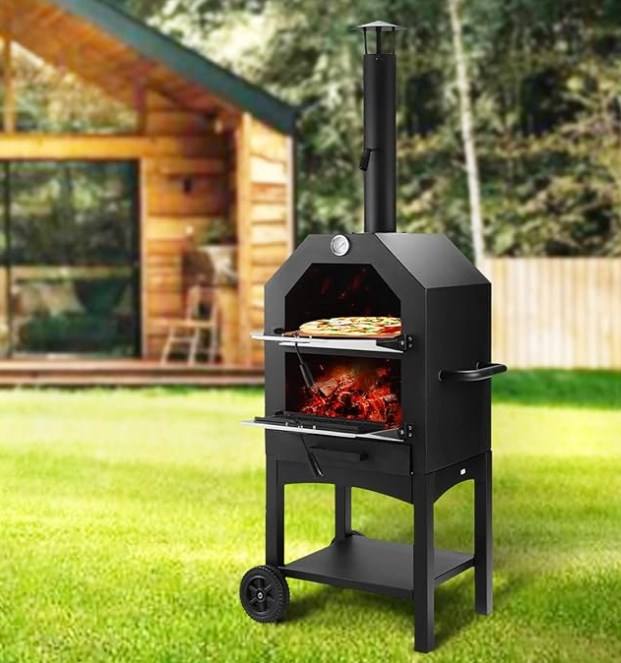
- Freestanding on cart: Complete oven on a wheeled stainless steel cart. Move it around the patio. Good for renters or seasonal use.
- Tabletop/ portable: Lightweight, under 150 lbs. Take it camping or to a tailgate. Limited capacity, but surprisingly capable.
Price Ranges: What to Expect
| Tier | Price (USD) | What You Get |
|---|---|---|
| Portable tabletop | $200 – $600 | Small cordierite or steel oven, basic insulation |
| Mid-range freestanding | $800 – $2,000 | 24-30 inch oven, decent insulation, cart included |
| Premium residential | $2,000 – $5,000 | Precast refractory dome, multi-layer insulation, 30-40 inch |
| Commercial entry | $4,000 – $8,000 | Heavy-duty refractory, 40-50 inch, NSF-ready |
| Built-in custom | $8,000 – $25,000+ | Full masonry construction, custom design, permanent |
Pizza Oven vs. Standard Grill: Can You Do Both?
A common question: “Can I just cook pizza on my gas or charcoal grill?”
The answer is technically yes — with a pizza stone and a lot of patience. But the results are fundamentally different. A grill lacks the dome radiant heat that cooks the top of the pizza simultaneously with the bottom. On a grill, you get a burnt crust and undercooked toppings unless you constantly rotate the pizza.
That said, many premium outdoor kitchen setups now include both a Santa Maria grill and a wood fired pizza oven side by side — they serve different cooking purposes and complement each other perfectly.
Maintenance Tips
A wood fired pizza oven requires minimal maintenance if used correctly:
- Cure the oven properly. New refractory ovens need a series of small, progressively hotter fires to drive out moisture. Skipping this step causes cracking.
- Clean ash after each use, but do not use water inside the oven. Ash absorbs moisture, which degrades the refractory over time.
- Use a door. A well-fitted insulated door keeps moisture out between uses and dramatically extends oven life.
- Inspect the dome annually. Small surface cracks in refractory are normal. Structural cracks that penetrate through the dome wall need professional repair.
Final Verdict
A wood fired pizza oven is not an impulse buy. It is a deliberate investment in outdoor cooking that will change how you entertain and eat. Prioritize insulation quality and material over cosmetic features. A basic-looking oven with excellent insulation will outperform a beautiful oven that cannot hold heat.
And if you are sourcing for a business — whether it is a pizzeria, a food truck, or a resort — work directly with a manufacturer that controls the entire production process. The oven is the centerpiece of your operation, and quality control matters.
Interested in a custom wood fired pizza oven built with refractory materials and multi-layer insulation? Contact Toshine to discuss OEM specifications, sizing, and factory-direct pricing.